
What is Griha Pravesh Puja
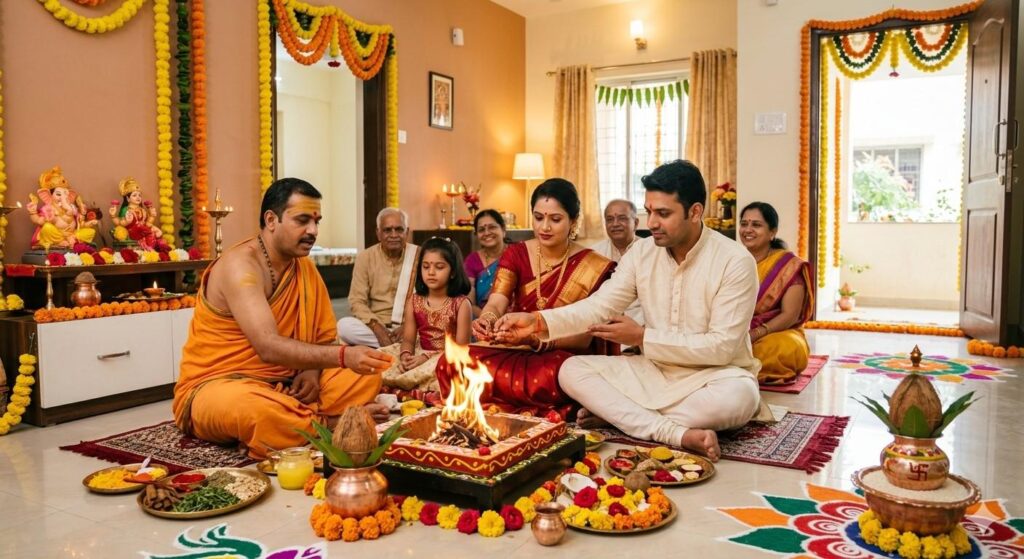
Griha Pravesh Puja is an auspicious ritual performed before entering a new home to ensure the presence of happiness, peace, and positive energy within the household.
By sanctifying the home, this puja symbolizes the dawn of happiness, prosperity, and a bright future for the family
.
Why Griha Pravesh Puja important before entering a new home
The Griha Pravesh Puja is performed to invite positive energy, peace, and prosperity into the home, thereby rendering the new beginning auspicious.
By dispelling negative energy, it heralds the commencement of a safe, joyful, and blessed life for the family.
What user will learn
You will learn in detail about the different types of Griha Pravesh Puja, the auspicious timing (Muhurat), the step-by-step procedure for the ritual, and the essential materials required.
Additionally, you will understand the significance of this puja from a Vastu perspective, and how it helps bring happiness, peace, prosperity, and positive energy into your new home.
Moving into a unused domestic is one of life’s most noteworthy mileposts. In Indian culture, a house isn’t just fair a structure of bricks and mortar, it’s a haven that houses your dreams and family’s future. To guarantee that your morning is filled with substance, wellbeing and joy, performing a Griha Pravesh Puja( housewarming shape) concurring to Vastu Shastra is essential.
This comprehensive companion covers the step- by- step Griha Pravesh Puja Vidhi and fundamental samagri if you’re arranging to move in 2026.
1. Choosing the Shubh Muhurat for 2026
The to begin with step in any Griha Pravesh is picking an favorable date. In 2026, a few dates adjust with favorable Nakshatras( groups of stars) like Rohini, Mrigashira, and Anuradha. A la mode Months Vaishakha( April- May), Jyeshtha( May- June), and Margashirsha( November- December) are customarily favored. Maintain a strategic distance from Moving amid Chaturmas( for the most part July to October) or amid Karmas/ Holashtak ages, as these are considered ominous for modern onsets.
2. Basic Griha Pravesh Puja Samagri List
Before the puja, make sure you have all the fundamental particulars( Samagri) prepared. Having everything set permits the custom to stream without intrusion. Arrange particulars required Divinities symbols of Master Ganesha and Goddess Lakshmi and Kalash
Set a bronze or brass Kalash, coconut, and 5 mangoes . Puja Essentials Kumkum, Roli, Turmeric( Haldi), Akshat( unbroken rice), and Sandalwood glue. Immolations Blossoms, libraries, desserts( Ladoo), regular natural products, and Panchamrit( drain, nectar, curd, ghee, sugar). Custom Instruments Incense sticks( Agarbatti), Dhoop, Camphor( Kapur), and a Hawan Kund for the fire custom. Entrance Mango prop toran and colors for Rangoli.
3. Step- by- Step Griha Pravesh Puja Vidhi Performing the puja with the right aim and method makes a difference clear” Vastu Doshas”( engineering scourges) and welcomes positive vitality.
Step 1 blessing and Beautification Totally clean the house some time recently the puja. Utilize swab water to wipe the bottoms, as swab is accepted to assimilate negative climate. decorate the Fundamental Entrance( Simha Dwar) with a elegant toran and a Swastika image utilizing kumkum.
Step 2 Breaking the Coconut The head of the family ought to break a coconut at the edge. This symbolizes the junking of impediments.
Step 3 The Favorable Passage Continuously enter the house with your right foot to begin with. Carry the symbols of Ganesha and Lakshmi, along with a filled Kalash, into the house whereas chanting” Om Gan Ganpataye Namah.”
Step 4 Ganesha Puja and Vastu ShantiSince Ruler Ganesha is the way of deterrents, his puja is performed to begin with. This is taken after by a Vastu Shanti Puja to mollify the Vastu Purush( the divinity of the house) and look for assurance for the structure and its inhabitants.
Step 5 The Kalash PujaFill a bobby
pot with water, put five mango clears out at the neck, and a coconut on best. This Kalash is set in the North- East( Ishaan) corner of the house, which is the most sanctified zone.
Step 6 Hawan ( Fire Ceremony) A Hawan is performed to decontaminate the climate. The bank from the therapeutic sauces utilized in the fire is said to cleanse the discuss and prohibit” fiendish eyes” or negative powers. Once the Hawan is total, carry the Hawan Kund into each room to spread the filtering bank.
Step 7 Bubbling the Drain A one of a kind and imperative portion of the Vidhi is bubbling new cow’s drain in the kitchen until it floods. This symbolizes an cornucopia of nourishment and riches in the unused ménage. This drain is too advertised to the divinities and taken part as Prasad.
4. vital Vastu Tips for Your Unused Domestic
The Sanctuary Put your puja room or overhang in the North- East corner. safeguarded the symbols confront East or West. The Primary Entryway guaranteed the entrance is well- lit and free of clutter. Dodge putting a shoe rack specifically in front of the fundamental entryway. Remain Overnight It’s customarily exhorted that the family ought to rest in the modern house on the night of the puja. Don’t take off the house empty for at slightest three days after the form.
5. Dos and Do n’ts for a Effective frame
Do Welcome musketeers and family to share the bliss, as their collaborative positive considers include to the home’s discuss. Don’t move any cabinetwork( but the gas cookstove) into the house until the puja is completed. Do guaranteed all windows and entryways are open amid the puja to let the positive vitality circulate. Conclusion A Griha Pravesh is advance than a custom; it’s a otherworldly reset for your living space. By taking after this Puja Vidhi and adjusting your move with the 2026 Shubh Muhurats, you welcome proceeding substance into your unused home. May your modern domestic be a put of unending joy and peace!
Welcome Prosperity to Your New Home
Griha Pravesh Puja is a time-honored Hindu ceremony that marks your first step into a new home. This sacred ritual cleanses the space of negative vibes, invites divine protection, and paves the way for happiness, wealth, and harmony. Imagine starting your new chapter with the gods’ blessings—your home transforms into a sanctuary of peace!
What Does Griha Pravesh Truly Mean?
Griha = Home or House
Pravesh = Entry or Arrival
Together, it symbolizes a blessed and auspicious entry into your dream abode.
3 Essential Types of Griha Pravesh Puja
Choose the right one based on your situation for maximum blessings:
Apoorva Griha Pravesh
Perfect for brand-new builds! This is the classic ritual for your very first entry into a freshly constructed home. It’s the most celebrated type, ensuring a strong foundation of positivity from day one.
Sapoorva Griha Pravesh
Ideal after a long absence—like post-renovation, travel abroad, or an extended stay away. It refreshes the energy and reignites the home’s joyful spirit.
Dwandwah Griha Pravesh
For moving into a pre-loved space. This powerful puja neutralizes lingering past energies, making the house feel truly yours with renewed prosperity.
Griha Pravesh Puja is not just a tradition, but an important spiritual practice that brings positive energy and harmony into your new home. It prepares the house for a peaceful and prosperous life.
Spiritual Benefits
Creates a pure and peaceful environment
Invites divine blessings into the home
Removes negative energies and obstacles
Promotes happiness, health, and harmony for the family
Removes Vastu Dosh
Helps correct Vastu imbalances in the house
Neutralizes negative effects of improper directions or structure
Brings balance between natural elements and living space
Brings Prosperity
Attracts wealth, success, and good fortune
Ensures smooth progress in personal and professional life
Fills the home with positive vibrations and growth energy
Griha Pravesh Puja Muhurat 2026 – sir puspal
For Griha Pravesh Puja Muhurat in 2026, the best timing generally depends on selecting an auspicious month, day, Nakshatra (constellation), and Tithi (lunar day) as per Vedic astrology. Here is a general guide for favorable periods in 2026:
● Best months
● Margashirsha (November-December)
● Magha (January-February)
● Phalguna (February-March)
● Vaishakha (April-May)
● Shravana (July-August)
● Ashwin (September-October)
● Auspicious dates
• Days ruled by Brihaspati (Thursday) and Ravi (Sunday) are generally considered very auspicious.
• Avoid days of Amavasya (New Moon) and Purnima (Full Moon) for moving in.
• Days ruled by Brihaspati (Thursday) and Ravi (Sunday) are generally considered very auspicious.
• Avoid days of Amavasya (New Moon) and Purnima (Full Moon) for moving in.
● Nakshatra & tithi
Favorable Nakshatras for Griha Pravesh:
• Rohini
• Mrigashirsha
• Pushya
• Anuradha
• Uttara Phalguni
• Hasta
Auspicious Tithis:
• Dwitiya (2nd day)
• Tritiya (3rd day)
• Panchami (5th day)
• Saptami (7th day)
• Dashami (10th day)
• Ekadashi (11th day)
• Trayodashi (13th day)
Summary:
Look for a day in the above months when the Tithi and Nakshatra match, preferably on a Thursday or Sunday, avoiding Amavasya and Purnima. Consulting a local astrologer with your birth details can provide the most precise Muhurat.
ITEMS REQUIRED TO PERFORM GRIHA PRAVESH / GRIH POOJA
Before moving into a new house, Hindus execute a religious ritual called Griha Pravesh, also known as Grih Pooja, to purify the area and welcome good fortune, wealth, and heavenly blessings. The flawless and customary execution of the ceremony is ensured by the proper preparation of the things needed for the pooja. The objects used are carefully selected in accordance with religious traditions and have symbolic meaning.
The Kalash (holy pot) is one of the most important components. Usually constructed of copper or silver, it has a coconut on top and is filled with water and mango leaves. The Kalash is seen as a symbol of life and divinity and stands for plenty. A coconut, which is offered to the gods during the ceremony and represents purity, is also highly significant.
Gangajal, or holy water, which is sprinkled throughout the house to cleanse the surroundings, is another essential component. Clean water can be utilised with appropriate mantras if Gangajal is unavailable. Other necessary ingredients for tilak and offerings are chawal (rice grains), haldi (turmeric), and roli (kumkum). These stand for wealth, virtue, and good fortune.
Flowers and garlands, which are offered to deities as a sign of devotion, are also necessary for the pooja. A cheerful and spiritual mood is produced by fresh flowers. A diya (oil lamp) is lit to drive out darkness and call forth heavenly light, while incense sticks (agarbatti) and dhoop are used to disperse fragrance and purify the environment.
A concoction of milk, curd, honey, sugar, and ghee called panchamrit is made for offerings and then given out as prasad. During the pooja, other offerings include fruits, cloves, cardamom, betel leaves, and nuts (paan and supari). These objects are used in customary ceremonies and are regarded as auspicious.
To execute a havan (sacred fire ceremony), a havan kund (fire pit) is frequently set up. Samidha (wood sticks), ghee, havan samagri, and camphor (kapoor) are necessary for this. The purpose of the havan is to seek the gods’ blessings and purify the surroundings.
Additionally, grains like wheat or rice are employed, particularly in the symbolic gesture where the lady of the home enters by gently kicking a pot full of rice. This symbolises wealth coming into the house. Sometimes a fresh broom and cleaning supplies are presented as representations of fresh starts and cleanliness.
The puja also requires idols or images of deities, particularly Lord Ganesha and Goddess Lakshmi. Goddess Lakshmi is called for wealth and success, whereas Lord Ganesha is worshipped first to remove impediments.
Finally, a red cloth, coins, and thread (kalava or mouli) are needed for a number of ceremonial rites. The entire process is typically led by a priest (pandit), who may recommend extra things based on local customs.
In conclusion, the objects needed for Grih Pooja have profound spiritual significance and are more than just ceremonial materials. When these materials are arranged properly, the pooja can be performed successfully and the new home will be peaceful, happy, and prosperous.
Dhriti
Before moving into a new home, Hindus undertake a spiritual house-warming ritual called Griha Pravesh Puja to ward off bad energy and welcome prosperity, serenity, and happiness.
1: Cleaning and Purification of the House
Make sure the entire house is clean.
In every room, sprinkle Gangajal (holy water).
Use toran, flowers, and rangoli to adorn the entrance.
guarantees a pure and upbeat atmosphere.
2: The Kalash Entry Ceremony
The lady of the home comes in first, carrying a Kalash that is filled with coconut, mango leaves, and water.
Kick a saucepan of rice gently at the door.
represents prosperity, plenty, and an auspicious start.
3: Ganesh Puja
To eliminate obstructions, perform Lord Ganesha Puja.
For prosperity and good fortune, offer modak, flowers, incense, and diya chant mantras.
4: Vastu Puja in Step Four
Worship Vastu Devta to balance the energies in your house.
Give them flowers, fruits, and grains.
promotes peace, prosperity, and harmony
5: The Ceremony of Havan
Perform a Havan (fire ritual) using mantras.
To the sacred fire, add ghee, wood, and herbs.
removes negativity and cleanses the environment
6: The Kitchen Ritual of Boiling Milk
Boil milk till it overflows in the new kitchen.
represents growth, abundance, and wealth.
Prepare a dessert for Prasad, like kheer 🙏
7: Final Aarti and Blessings Join loved ones in performing Aarti.
Accept the blessings of the elders.
Serve prasad and participate in the festivities with the visitors.
Hindu customs state that it is unlucky to move into a new home without first completing Griha Pravesh Puja, which is thought to purify the area and provide prosperity, good energy, and divine benefits. In addition to ensuring harmony and tranquility in the home and marking a holy start for the family’s new journey there, performing the puja helps eliminate any negative energies. It is also viewed as a means of pursuing prosperity, health, and safety for each member of the household.
Can Complete Griha Pravesh Puja Without A Pandit.
Yes, if you carry out a straightforward, serious ceremony on your own, you can complete Griha Pravesh Puja without a pandit.
When everything is alright
There isn’t a priest accessible
You are aware of the fundamental procedures and sayings.
When not advised
it’s a straightforward house entry.
You want a complete traditional Vedic ritual for new construction that requires Vastu shanti/Havan.
The family demands a priest-led Vidhi . The bare minimum you should do:
Chant simple mantras, light a diya, enter with a kalash, pray to Ganesh and Lakshmi, and boil milk in the kitchen.
Cost of Griha Pravesh Puja in India
1. Basic Puja Price
It typically costs between ₹2,500 and ₹7,000 for a basic, self-run Girah Parvesh with basic samagri like kalash, flowers, Diya, coconut, rice, and milk. This is appropriate for families that follow simple rites without a priest, emphasising dedication, hygiene, and simple prayers at home.
2. Alongside Pandit
For a proper Vidhi, hiring a priest raises the price. Pandit fees often fall between 5,000 to 11,000. Depending on the city, the date of the muhurta, and the priest’s skill, the total cost, including setup and samagri, ranges from ₹7,000 to ₹15,000.
3. Alongside Havan
It takes more time and materials to add a Havan (fire ritual). In metro areas or for elaborate, traditional events, the total cost typically increases to ₹15,000–₹30,000.