
Importance of Navratri in Sanatan Dharma
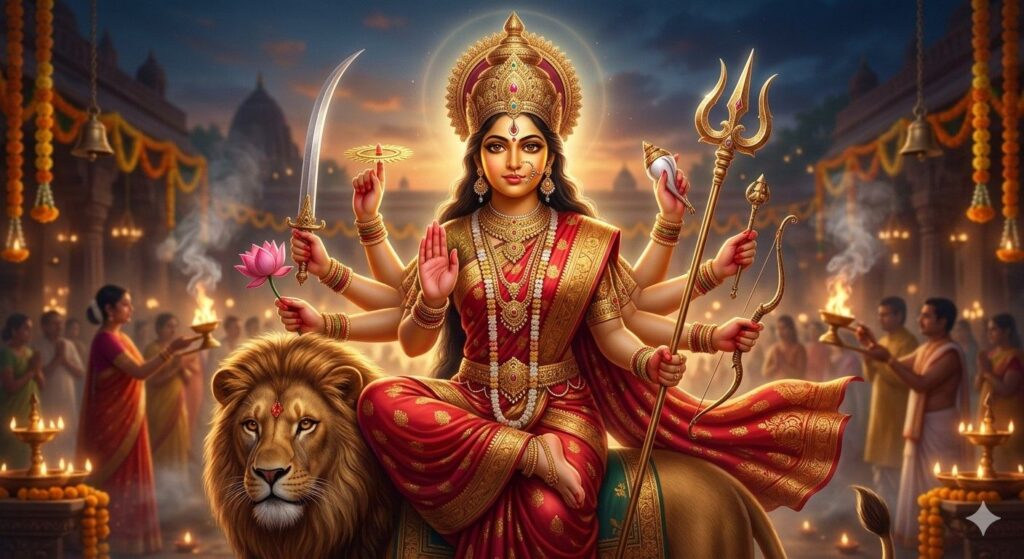
Navratri is a Hindu festival that lasts for 9 days. Each day is dedicated to the worship of a different form of the Goddess. If you’re looking how to perform Navratri puja at home step by step, this complete guide will help you follow the correct vidhi with kalash sthapana, daily rituals, powerful mantras, aarti, and fasting rules as described in the Vedas and Puranas.
The word Navratri comes from Sanskrit, where “Nav” means nine and “Ratri” means nights—together meaning nine nights.
Navratri is celebrated in honor of Goddess Durga and her victory over Mahishasura. It is believed that Maa Durga fought with Mahishasura for 9 days and defeated him on the final day.
These 9 days are considered very powerful and sacred. Navratri symbolizes the victory of good over evil.
Navratri is celebrated three times a year:
- Chaitra Navratri
- Sharad Navratri
- Gupt Navratri
The festival is celebrated with great devotion. During these 9 days, people immerse themselves in the worship and devotion of the Goddess.
Worship of Maa Durga and her 9 forms
Navratri means worshipping a different form of the Goddess each day. During these nine days, the nine forms of Goddess Durga are worshipped:
- Day 1 – Maa Shailputri: The Daughter of the Mountains
- Day 2 – Maa Brahmacharini: The Path of Self-Discipline and Perseverance
- Day 3 – Maa Chandraghanta: The Awakening of Divine Courage
- Day 4 – Maa Kushmanda: The Creative Force of the Universe
- Day 5 – Maa Skandamata: The Nurturing Power of Divine Love
- Day 6 – Maa Katyayani: The Fierce Warrior of Justice
- Day 7 – Maa Kalaratri: The Dark Night of Transformation
- Day 8 – Maa Mahagauri: The Radiance of Inner Purity
- Day 9 – Maa Siddhidatri: The Bestower of Divine Knowledge and Perfection
Spiritual benefits: Shakti, purification, prosperity
- Shakti (Inner Strength): Increases confidence and positivity
- Purification: Cleanses mind, body, and surroundings
- Prosperity: Brings peace, success, and good fortune
What is Navratri and Why is it Celebrated?
Meaning of Navratri
· Navratri is celebrated to commemorate the joyous occasion when Mother Durga vanquished the demon named Mahishasura and achieved victory over him.
· “Nav” = 9, “Ratri” = Nights
Scriptural Significance
· The Chandi Path is also known as the Durga Saptashati; it is a highly significant scripture associated with Navratri. This revered text is enshrined within the Markandeya Purana and comprises 700 verses.
· And this original text is divided into three parts:
- 1. The Story of Madhu and Kaitabha
- 2. Mahishasuramardini
- 3. The Story of Shumbha and Nishumbha
Types of Navratri
· The Chaitra Navratri :- Chaitra Navratri is associated with the birth anniversary of Lord Shri Ram and devotees of Lord Shri Ram celebrate this day by fasting and performing puja.
· Sharad Navratri :- We celebrate Sharad Navratri during the month of Ashwin—which falls between September and October—and we observe this festival because, on this day, Goddess Durga vanquished a demon named Mahishasura.
· 3 Gupt Navratri :- 1 It is mainly followed by spiritual seekers, sages, and tantrics.
· Gupt Navratri is not like other Navratris, this ritual is celebrated very secretly.
Preparation Before Starting Navratri Puja at Home
Cleaning and Purification
Physical cleaning of home ( First, thoroughly clean the entire house physically,)
Spiritual cleansing (followed by spiritual purification by sprinkling Ganga water to create an atmosphere of positive energy)
Required Puja Samangri(Checklist)
Kalash(copper earthen pot)During the puja , a Kalash is filled with clean water and placed alongside mango leaves and a coconut,The Kalash installation creates a spiritual atmosphere in the worship space and bestows the blessing of Goddess Durga.
Mango leaves(5 or 7 mango leaves are placed on the mouth (top) of the Kalash in such a way that the leaves are visible).
Red Clothes( Wearing red clothes during navratri puja has special religious and spritiual significance.Red symbolizes strength, courage, and auspiciousness, and it is also the favourite color of Goddess Durga).
Red Clothes( Wearing red clothes during navratri puja has special religious and spritiual significance.Red symbolizes strength, courage, and auspiciousness, and it is also the favourite color of Goddess Durga).
Roli, Chawal, Diya(Roli, Rice , and Diya hold special religious significane in navratri puja and are used to complete the puja ritual.Roli(Kumkum) is used to apply tilak and offer it to the Goddess).
Roli, Chawal, Diya(Roli, Rice , and Diya hold special religious significane in navratri puja and are used to complete the puja ritual.Roli(Kumkum) is used to apply tilak and offer it to the Goddess).
Durga idol/Photo(The idol photo of Maa Durga is kept in navratri puja because it is considered a symbol of the blessing of Goddess Shakti).
Flower and Fruits(The offer of flower and fruits during navratri puja has special religious significance . Flower are considered symbol of reverence, purity, and devotion).
Jau( barley seeds)(Barely seeds are used during navratri puja such as sowing or setting up to the pot. Growing barley seeds is considered a symbol of prosperity, new beginnings, and good future).
Ideal Direction and Setup
East or North facing puja area(East is the direction of sunrise and symbolizes new beginning, energy, and positivity. North ,on the other hand , is associate with wealth prosperity, and the blessing of the gods and Goddess) Chowki setup with red clothes.
Navratri Pooja Vidhi (Daily Ritual) Step By Step
Morning Puja Procedure
Bath and clean clothes:
Before starting the puja, devotees should take a bath and wear clean clothes to maintain purity of body and mind. This simple ritual creates a positive and peaceful environment, helping you connect deeply with Maa Durga. It is believed that starting the puja with cleanliness and devotion attracts divine energy, bringing happiness, peace, and spiritual blessings into your life.
Lighting diya:
The soft glow of diyas is believed to remove negative energy and fill the surroundings with positivity, peace, and happiness. This simple act invites divine blessings and brings prosperity to the home.
Before commencing worship, we invoke Mother Durga with deep reverence and devotion, so that she may take up residence in our home and our hearts. This invocation, performed with a sincere heart, bestows upon us the Mother Goddess’s grace, strength, and protection.
Invocation of maa durga:
During the Navratri Puja, when we make a solemn resolve with a sincere heart, our devotion deepens even further, enabling us to worship Goddess Durga wholeheartedly. Before commencing the puja, we should offer water.
Daily offering
Flowers (especially red):
We should offer red flowers to Maa Durga, as they symbolize strength and devotion and bring positive energy into our lives.
Fruits:
We should offer fresh fruits to Maa Durga, as they symbolize purity and gratitude and bring positivity and blessings into our lives.
Mishri or kheer:
We should offer Mishri and Kheer as *Prasad* to Mother Durga, and distribute it among everyone after the worship.
Evening Puja
Deep daan:
For peace and happiness in the house, we should donate a lamp after lighting a lamp at the time of dusk, which brings peace and happiness in the house.
Durga Chalisa:
During Navratri, we should recite Durga Chalisa which gives us peace of mind and blessings of Maa Durga.
Aarti:
Complete all nine days of Navratri, conclude the worship with devotion, and receive the blessings of Mother Durga.
DAY- WISE NAVRATRI PUJA (9 DAYS OF DEVI WORSHIP)COMPLETE GUIDE
Introduction to navratri puja
Navratri is a sacred festival in the Hindu religion. During this time, the nine forms of the Goddess are worshipped, bringing strength and positivity .
In Navratri, each day is dedicated to a different Goddess; therefore, this day-by-day Navratri Puja guide is perfect for you.
Day 1 : Maa Shailputri
The first day of navratri is dedicated to goddess shailputri ,who is a symbol of strength and stability .the kalash is established on this day
METHOD OF WORSHIP
1. Take a bath and wear clean clothes.
2. Establishing the kalash
3. Offering white flowers to mother.
4. Offering desi ghee
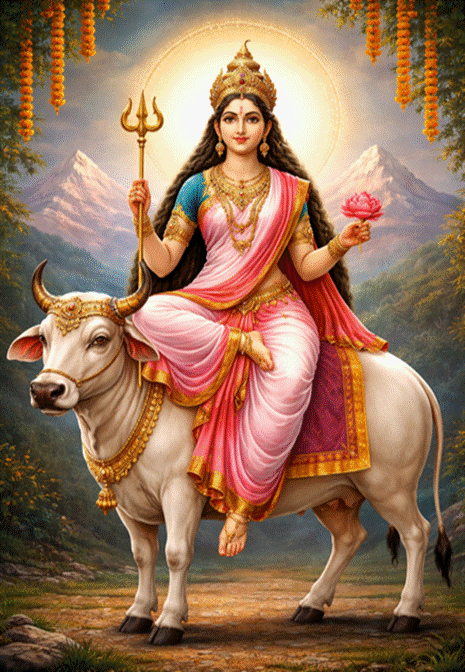
DAY 2- Maa Brahmacharini
On second day , mother brahmacharini is worshipped,which is symbol of dedication and penance
METHOD OF WORSHIP
1.Offered flowers and kumkum to mother
2.Fruits and sweets should be offered.
3.light a lamp and perform aarti.
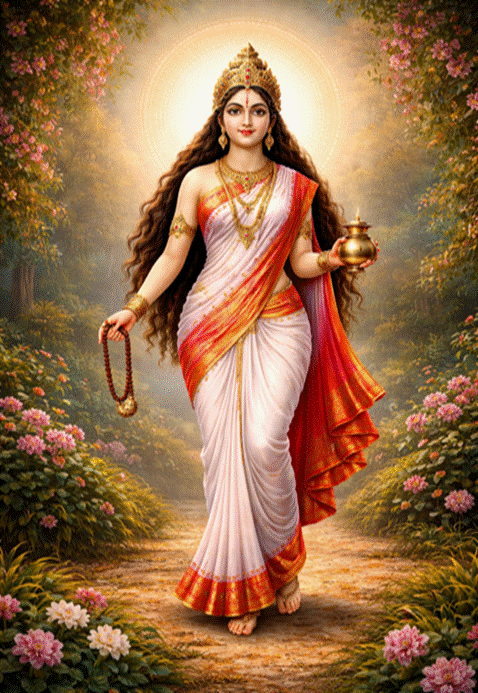
Day 3- Maa chandraghanta
On the third day , goddess Chandraghanta is worshipped as a symbol of peace and bravery.
METHOD OF WORSHIP
1.offer milk to the mother goddess.
2.perform her aarti
3.recite durga chalisa
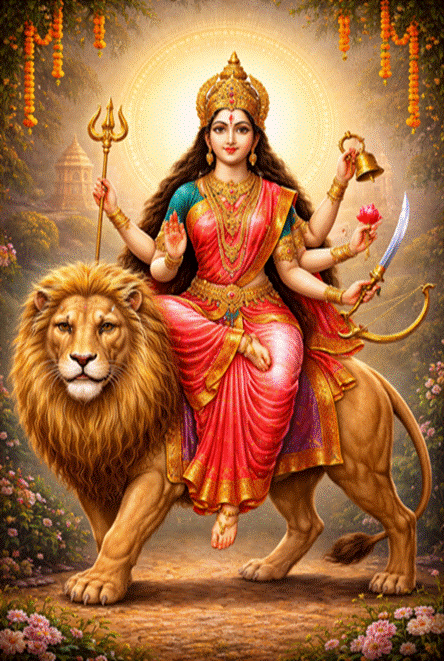
Day 4 Maa kushmanda
On the fourth day, mother kushmunda is worshipped, who is considered the creator of the universe.
METHOD OF WORSHIP
1.Offer sweet food to the mother goddess.
2.light a lamp and meditate
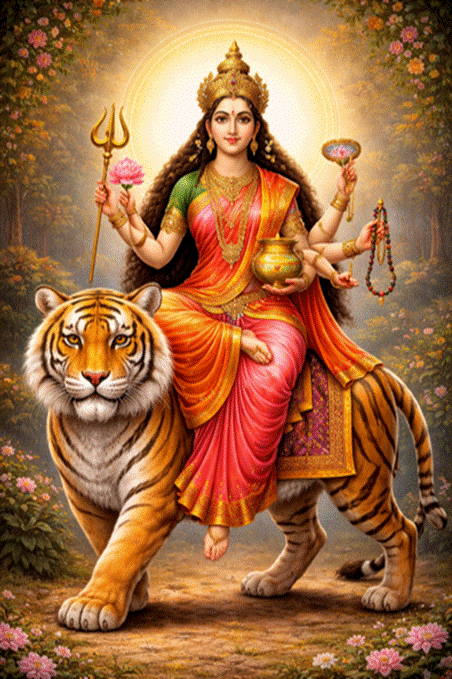
DAY-5 – MAA SKANDMATA
On the fifth day , goddess skandmata is worshipped, who is a symbol of motherhood and care.
METHOD OF WORSHIP
1.offered fruits,
2.offer flowers and lamps.
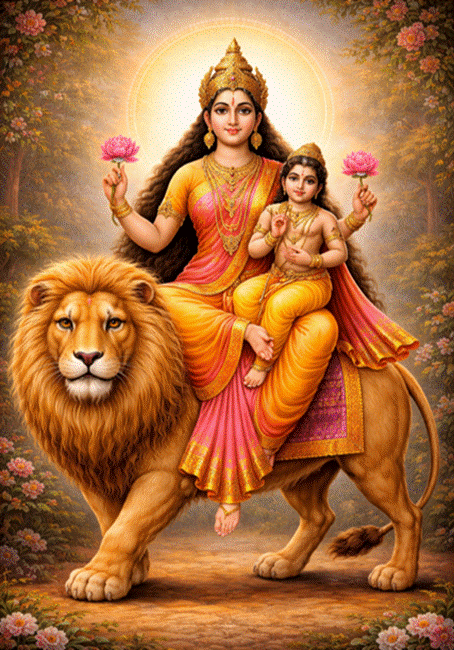
DAY 6- MAA KATYAYANI
On sixth day, goddess katyani is worshipped, who is a symbol of courage and strength
METHOD OF WORSHIP
1. Offer honey
2. Meditate on the mother
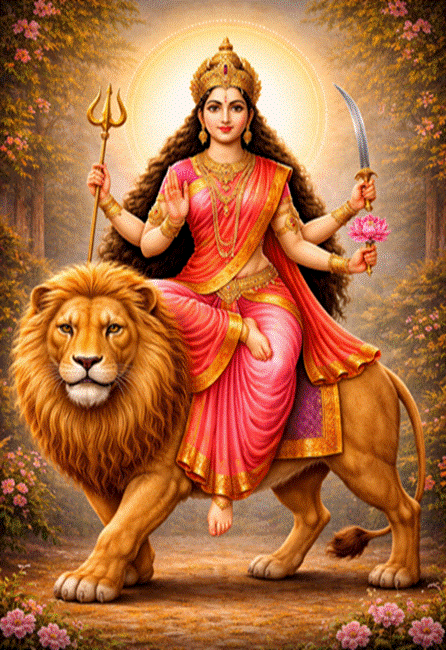
DAY 7- MAA KALARATRI
On the seventh day, maa kalratri is worshipped, who is considered to be the powerful form of the mother goddess.
METHOD OF WORSHIP
1.Offer jaggery as prasad
2.Light a lamp and perform the aarti of the mother goddess.
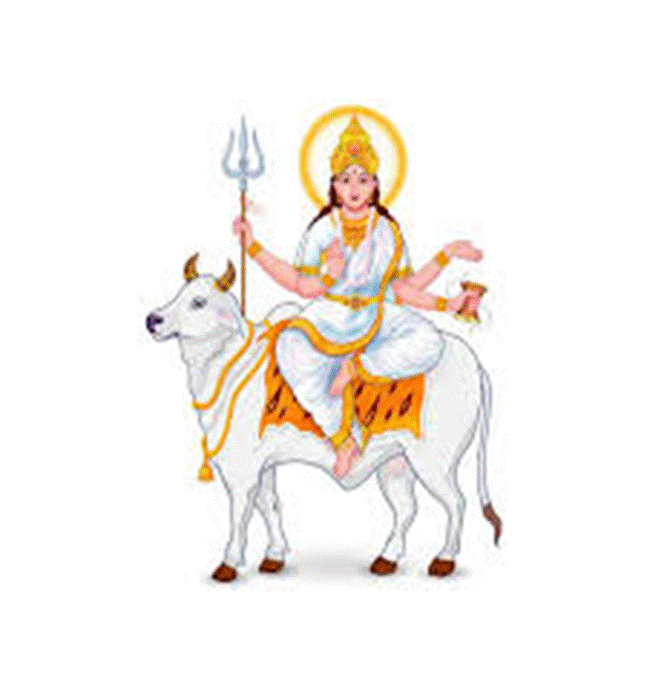
DAY 8- MAHAGAURI
Mahagauri is worshipped on the eight day . kanya puja is also performed on this day
METHOD OF WORSHIP
1.Halwa, puri and gram should be offered prasad
2.feed nine girls.
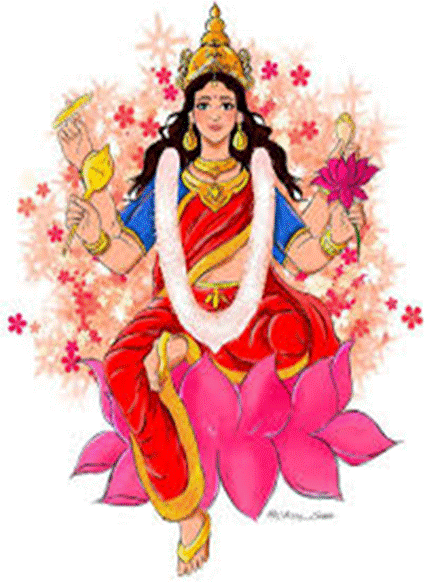
DAY 9- MAA SIDDHIDHATRI
The last day of navratri this day is dedicated to maa siddhidhatri
METHOD OF WORSHIP
1.Offersesame seeds and kheer
2.Perorm aatri and chat mantras
Important Navratri Mantras (Beginner to Advanced)
The mantras of Navratri are extremely sacred and powerful. Chanting these mantras during the days of Navratri—while meditating upon the Mother Goddess—connects us to the divine energy of the nine forms of Maa Durga. Each mantra possesses its own unique spiritual significance; the grace of the Mother Goddess remains upon those devotees who chant these mantras with deep faith during Navratri, bringing them happiness, peace, and prosperity in their lives.
Basic Mantra (For Beginners)
“Om Dum Durgaye Namah” is a Bija Mantra (seed mantra) dedicated to Goddess Durga; it serves as a simple and accessible mantra for those observing the Navaratri fast for the first time, or for those who are not extensively familiar with mantras. This powerful mantra should be chanted while meditating upon the ten-armed form of Goddess Durga. Goddess Durga is pleased by the recitation of this mantra, bestowing protection and peace upon her devotees in their lives, while also aiding them in combating negative energies.
Beej Mantras
Beej mantras are extremely powerful. According to the scriptures, the chanting of these seed mantras can even grant a devotee a divine vision of Goddess Durga in her ten-armed form. One such Beej mantra is “Dum,” which serves as the seed mantra of Goddess Durga; its recitation dispels fear and obstacles from a devotee’s life, while simultaneously awakening a protective, warrior-like energy within them.
Durga Saptashati Key Shlokas
During the days of Navratri, one should recite the Durga Saptashati and Durga Chalisa with deep reverence. You may perform the recitation of the Durga Saptashati at three times—morning, afternoon, and evening—while meditating upon Goddess Durga. Reciting the Durga Saptashati not only imbues the mind with spirituality but also aids in establishing a deeper connection with Goddess Durga, ensuring that her grace remains bestowed upon her devotees.
Here are sone important verse from Durga saptshati;
● Argala Stotra
The Argala Stotra is a significant and powerful hymn within the Durga Saptashati. It is believed that reciting this hymn during Navaratri opens spiritual gateways and simultaneously renders the mind sattvic (pure and virtuous). Furthermore, it bestows positivity, well-being, and—for devotees—protection and success.
● Keelak Stotra
The Keelak Stotra constitutes a highly significant section of the Durga Saptashati. It describes the Mother Goddess in her benevolent, blissful, and omnipotent forms. This hymn venerates Mother Durga as the World Mother—the bestower of divine splendor, good fortune, perfect health, and ultimate liberation. Reciting this stotra during the festival of Navaratri serves to remove obstacles for devotees who are endowed with pure spiritual wisdom.
Advanced Sadhana Mantras
Advanced Sadhana Mantras are powerful and sacred incantations intended for profound spiritual practice. Practitioners recite them with the utmost caution and purity. The chanting of these advanced mantras is undertaken exclusively by those seekers who share a deep connection with Goddess Durga and aspire to receive divine blessings. To attain the highest spiritual rewards, these mantras must be chanted with exceptional discipline, purity, and deep devotion.
Here are some of the Advance mantra;
● Navarna Mantra
The Navarna Mantra—Om Aim Hreem Kleem Chamundaye Vichche—is one of the most powerful mantras dedicated to Goddess Durga, specifically invoking her fierce aspect that serves to protect her devotees. During the days of Navratri, devotees chant this mantra to attain strength, protection, divine energy, and to awaken their spiritual power.
● Usage guidelines and precautions
Before chanting an advanced mantra such as the Navarna Mantra, a devotee should first meditate upon Goddess Durga—preferably during the Brahm Muhurat (the early hours of the morning), or by lighting a lamp at dawn or dusk—and then proceed to chant the mantra. Those who are unfamiliar with the proper procedure for chanting this mantra should refrain from doing so, as these mantras are extremely powerful. While chanting the Navarna Mantra, one must always maintain a spirit of devotion, discipline, and reverence.
Navratri Aarti (Complete Lyrics & Method)
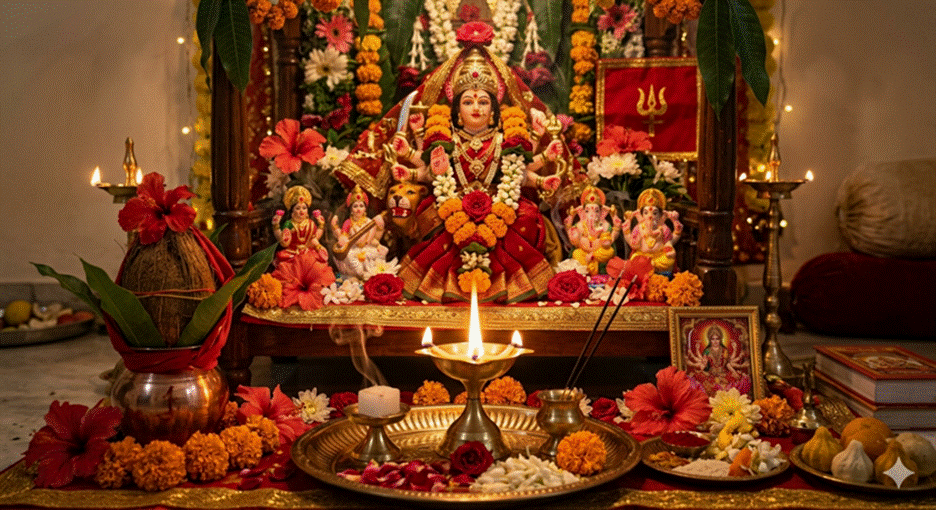
Popular Durga Aarti
● “Jai Ambe Gauri” full lyrics
● The ‘Jai Ambe Gauri’ Aarti is a hymn sung during the festival of Navratri to propitiate Goddess Durga. It brings happiness and peace to devotees, and songs in praise of Goddess Durga are sung throughout this time
How to Perform Aarti Properly
● Durga aarti ke duran
● a lamp is circled seven times in front of the idol of Goddess Durga so that devotees may receive her blessings.
● Use of camphor and diya
● During the Durga Aarti, camphor and oil lamps are utilized while performing the ritual worship of Mother Durga. The burning of camphor purifies the surrounding atmosphere and serves as a symbol of the devotees’ devotion to Mother Durga.
● During the Durga Aarti,
During the Durga Aarti, devotee’s light lamps and worship Goddess Durga. This ritual serves as a symbol of reverence and devotion towards the Goddess.
Navratri Fasting Rules(Vrat Vidhi)
Navratri fast has immense spiritual significance in Sanatan Dharma. It is not just about tormenting oneself, but it is a path of self-purification. From a spiritual perspective, the lightness of the body increases one’s receptivity.
Types of fasting:
● Nirjala fasting:
Nirjala fasting is considered the most difficult and important fast in Hindu religion. In this, both food and water are sacrificed from sunrise to sunrise of the next day (at the time of Paran).
● Some key points about it:
Test of Patience: This is not just physical fasting, but a test of control over the mind and senses.
Major Occasions: It is mainly performed on Nirjala Ekadashi. Apart from this, many people also take this difficult resolution on Mahashivratri, Karva Chauth or Ashtami/Navmi of Navratri.
Caution: Since water is not consumed in this, it is done only by completely healthy people or experienced seekers. It is generally not recommended for the sick, the elderly, or children.
● Phaalahar Vrat:
Phaalahar Vrat is an important form of faith in Hinduism. Consuming only fruits, milk and water for nine days is considered sattvik from a religious and spiritual point of view.
Balance of nutrients: The body gets essential vitamins and minerals, for this consumption of different types of fruits (like banana, apple, papaya and pomegranate) is useful.
Fluid intake: There is no shortage of water in the body. Consuming coconut water or milk in addition to enterprise water helps maintain intake.
Medical advice: Before going on any type of long appointment, especially if you have any pre-existing health problems, it is important to seek the advice of a doctor or nutritionist. Restricting fruits for a long period of time may not be suitable for everyone’s body.
● One-time sattvic meal (one sattvic meal): Eating a complete sattvic meal in the evening after evening prayers. Satvik food does not include onion, garlic, non-vegetarian ingredients and strong spices.
Food items eaten during Navratri fast
● Kuttu ki roti (buckwheat flatbread) – a major part of the Navratri diet; Highly nutritious and low in gluten.
● Water chestnut flour (water chestnut flour) – used to prepare roti, puri and halwa.
● Sabudana (Tapioca Pearls) – Khichdi, vada and kheer made from sago are favorite dishes during Navratri.
● All fresh fruits – banana, apple, papaya, pomegranate, grapes and mango (seasonal).
● Milk, Yogurt, and Cream — All dairy products are permitted and encouraged during the fast.
● Makhana (Fox Nuts/Lotus Seeds) — Considered highly *sattvic* (pure), energy-boosting, and easily digestible.
● Sendha Namak (Rock Salt) — The only salt permitted for use during the Navratri fast.
● Sweet Potatoes, Potatoes, and Raw Bananas — Cooked without the use of onions or garlic.
● Dry Fruits — Almonds, cashews, raisins, and walnuts provide energy during the fasting period.
Things to Avoid During Navratri
● Onion and Garlic — These are considered *Rajasic* and *Tamasic* in nature; These disturb the mind and weaken spiritual sensitivity.
● All non-vegetarian foods—meat, fish, and eggs are strictly prohibited.
● Alcohol and intoxicants—these are strictly prohibited during these nine holy days.
● Common salt (iodized salt)—replace it entirely with rock salt.
● Rice and wheat (those observing strict fasts)—however, many devotees eat buckwheat and water chestnut products.
● Pulses and beans—these are avoided during the fasting days.
● Mustard seeds, fenugreek—these are generally not used in the diet of strict fasting people.
Kanya Pujan (Kanjak) Vidhi – Day 8 or 9
Importance of scriptures
Kanya Pujan is a traditional Hindu ritual performed on the 8th and 9th days of Navratri. It involves the worship of young girls aged between 2 and 10 years. In the Hindu tradition, young girls are worshipped as goddesses.
Worship of Young Girls as Devi
Devotees believe that every young girl is a Goddess, whom we worship during Navratri in the form of the Navadurga. This ritual teaches that girl children and women should be treated with respect and care.
Step-by-Step Kanya Puja
1. Invite 9 Girls-
In kanya Puja, invite 9 young girls aged 2 to 10 years. You may invite 5 or 7 girls, or you can even invite just one girl.
2. Wash Their Feet-
Greet the girls respectfully and wash her feet with humanity. This is a symbol of perfection and respect.
3. Offer Prasad (Halwa, Puri, Chana) & apply tilak-
After the meal, give them gifts such as a red chunari, money, fruits, pencils, etc.
4. Give Gifts-
After the meal, offer them small gifts—such as a red chunari, pencils, bangles, money, or fruits.
5. Seek Blessings-
Finally, touch their feet and seek their blessings. This brings happiness and prosperity into your home.
Important Navaratri 2026 Do’s and Don’ts
Navaratri Puja Rules
Do’s
● Maintain Purity- During the nine auspicious days of Navaratri, you should do Deep cleaning and try to bathe in early hours of the day to invite positive energies and it is said that goddess Durga visits every home during the puja time in these nine days.
● Chant mantras daily- For spiritual blessings during Navaratri 2026, recite Durga saptashati and chandi path at morning and evening during pooja.
● Colours to wear during Navaratri 2026
Day 1 ( Maa Shailputri) wear Yellow in March and Orange in October
Day 2 ( Maa Brahmacharini) wear Green in March and White in October
Day 3 (Maa Chandraghanta) wear Grey in March and Red in October
Day4 ( Maa Kushmanda) wear Orange in March and Royal Blue in October
Day 5 (Maa skandamata) wear White in March and Yellow in October
Day 6 (Maa Katyayani) wear Red in March and Green in October
Day 7 (Maa Kalaratri) wear Royal Blue in March and Grey in October
Day 8 (Maa Mahagauri) wear Pink in March and Purple in October
Day 9 (Maa Siddhidatri) wear Purple in March and Peacock green in October
Don’ts
● Avoid sleeping on bed- During the Auspicious days of Navaratri avoid sleeping on bed rather sleep on floor this act is seen as a form of penance and a way to connect with the earth’s natural energy. Adapt sattvik Lifestyle.
● Avoid Cutting hairs or nails- During Navratri, many devotees adhere to the practice of not cutting their hair and nails. This tradition is rooted in the belief that hair and nail are extensions of the body, and maintaining them as they are helps to stabilize energy during this sacred period.
● Avoid Getting Angry- During the auspicious days of Navratri, it is advised to maintain a calm. Getting Angry is considered Auspicious and is believed to disrupt the spiritual harmony of the festival.
How to Perform Navratri Puja for Working People (Modern Adaptation)
Short Puja Method
• First, clean the place of worship and sprinkle some Gangajal.
Before setting everything up, place a photo of Goddess Durga at the पूजा spot.
• Offer 1–2 flowers to the Goddess.
For bhog (offering), you can keep:
• Fruits or dry fruits •
• Or simple mishri (sugar crystals) and cardamom
• Light a ghee diya (lamp) or incense sticks.
• Chant the mantra: “Om Dum Durgaye Namah” (11 times)
• Finally, perform a short aarti of Amba Maa
Digital Arti And Mantra Listing
If someone doesn’t have much time to perform aarti, they can play it online while getting ready or doing their daily work. This helps save time and still allows them to do their पूजा. You can play aarti on apps like YouTube, Spotify, or Amazon Music. In the evening, if you come home tired and have a lot of work with no time for proper rituals, just play online aartis and mantras. Then, you can chant along while doing your work.
Minimal Setup Version
If you want to keep the setup of Goddess Durga simple, just choose a small space like a chair or a desk where you can perform the puja. Place a photo of the Goddess there, light a diya (or even use an LED diya), and offer a few flowers. Do a short prayer daily. Then, on the last day, you can perform the puja with full rituals.
Common Mistakes to Avoid in Navratri Puja
1 Incorrect kalash placement
Kalash Sthapan (the ritualistic installation of a sacred vessel) is an extremely significant rite and process through which a divine presence is established within our home. To perform this installation, a vessel is first filled with sacred soil and various types of seeds. Subsequently, water and mango leaves are placed inside the vessel, along with a coin and a coconut. Placing this vessel in the North or East direction is considered auspicious; conversely, placing it in an incorrect location or direction diminishes the significance of the worship.
2 Ignoring Sankalp (Puja Resolution)
Taking a *Sankalp* (sacred vow) is an essential prerequisite before commencing any *Puja*. Some individuals begin the worship without taking this vow, rendering the ritual incomplete. Prior to taking the *Sankalp*, every devotee—through their thoughts, words, and deeds—pledges to Mother Durga that they will perform the worship with unwavering faith throughout the entire nine days, while also strictly adhering to all prescribed methods, rituals, and procedures.
3 Not Maintaining Consistency
During the nine days of Navratri, we customarily observe regular worship or fasting. Interrupting the worship midway or failing to properly plan and adhere to the prescribed rituals is considered inappropriate. Therefore, by worshipping Mother Durga with unwavering faith and devotion throughout these nine days, one becomes a recipient of Her divine grace.
SCIENTIFIC AND SPIRITUAL BENEFITS OF NAVRATRI PUJA
Navratri puja helps balance the body and mind, providing both scientific and spiritual benefits. Fasting during Navratri cleanses the body of impurities, thereby improving the body’s ability to digest food and fight diseases caused by changing weather.
And from a spiritual perspective, Navratri is also considered a means of balancing the energy balance within the body.
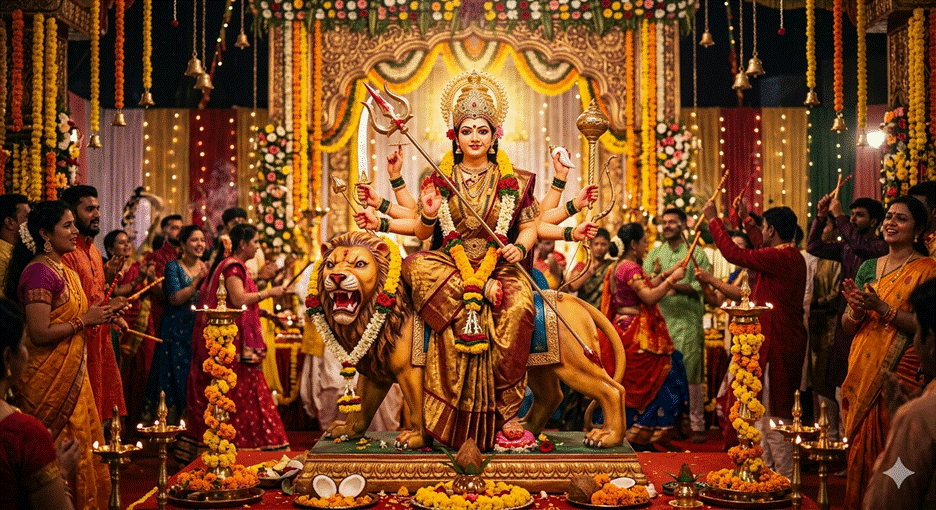
- Seasonal detox (fasting science)
Navratri fasting is not only religious but also provides scientific benefits and it can be a seasonal detoxifications. Fasting gives the digestive system time to rest and heal, immunity boost and eating fruits during Navratri also detoxifies the body.
- Mind purification through mantra chanting
Chanting mantras during Navratri calms the mind and reduces stress. Scientifically speaking, chanting mantras repeatedly in one go has a positive effect on the brain and nervous system.
● Energy alignment (chakras & Shakti)
Navratri is associated with increasing spiritual energy and balancing the chakras. Worshiping the nine forms of the Goddess is also considered a way to activate the nine energy centers of the body.
Frequently Asked Questions (FAQs) :
- How to do Navratri puja without fasting?
Navratri Puja without fasting can definitely be done by following the given below steps.
i) Clean your home and create a dedicated altar space for the Deity. Place an idol or image of Goddess Durga, along with a kalash, flowers, incense sticks, and a diya or a lamp
ii) Start each day with a bath and wear clean clothes before the Navratri Puja.
iii) After you light the diya and incense, offer fresh flowers and fruits to the Goddess. Satvik food like kheer, halwa, or coconut-based sweets can be prepared as offerings, even if you are not fasting.
iv) Durga Chalisa or other prayers such as “Ya Devi Sarva Bhuteshu” should be recited with devotion and one can read or listen to Durga Saptashati for spiritual connection.
v) One should also maintain a disciplined routine and a peaceful positive atmosphere at home by avoiding negative thoughts, arguments, and unhealthy habits.
vi) Charity is considered important too and you can donate food, clothes or money to those in need.
vii) Short aarti can be performed in the evening followed by meditation or gratitude.
The essence of Navratri lies in the worship of Goddess Durga with complete devotion and purity of mind and not just by fasting. By focusing on worship, good deeds, sincerity, peace and kindness, one can fully experience the spiritual benefits of Navratri without keeping a fast.
- What time is considered ideal to do the puja on Navratri?
The ideal time to perform Navratri Puja depends on the type of worship you are doing, but generally, Pratah Kaal (puja performed at dawn) and Sandhya Kaal (puja performed at dusk) are considered most auspicious.
i) Morning Puja (Best Time)
The ideal time to do the Puja for Navratri is early morning, shortly after sunrise—typically between 6:00 AM and 9:00 AM. This period is known as Pratah Kaal. It is believed that prayers offered at this time are more effective because the human mind is fresh and focused and the surroundings are calm at dawn.
During Navratri it is considered essential to begin the day with a bath followed by putting on clean clothes and then performing the puja with offerings like flowers, fruits, diya, and incense. Chanting Durga mantras during this time is also considered highly beneficial.
ii) Evening Puja (Alternative or Additional Time)
The other alternate time where one can also perform puja is during sunset, usually between 6:00 PM and 8:00 PM. This is called Sandhya Kaal which is also considered a powerful spiritual period. Lighting a diya and doing aarti in the evening along with chanting the Durga Chalisa followed by meditation and gratitude helps create a peaceful and divine atmosphere at home.
iii) Special Timings (Advanced Practice)
For deeper rituals, some devotees also follow Abhijit Muhurat which is a midday auspicious time or specific daily tithis which are lunar timings and these are optional.
A time that suits us the most should be chosen so that one can follow the ritual with consistency, devotion and sincerity making Navratri Puja effective and spiritually fulfilling.
- Can unmarried women and young girls keep the Navratri Vrat?
Unmarried women and young girls can absolutely observe the Navratri Vrat of Navratri Fasting. Their participation is rather considered highly auspicious and sacred in Hindu tradition because Navratri celebrates the divine feminine energy also known as Shakti which is believed to reside in every woman and girl.
Spiritual Significance: In Hindu culture girls are often seen as a form of Goddess Durga, especially during rituals like Kanya Puja which is usually on Ashtami or Navami of Navratri. In this ritual, little girls are worshipped and offered food and gifts as a way of offering honour to Goddess Durga. Because of this belief, an unmarried woman or a young girl keeping a fast is considered auspicious and divinely powerful.
Fasting Guidelines: Unmarried women and girls can keep the fasting by following either of the three options given below according to their comfort and health.
- Nirjala fast – This is ideal for those who can keep the fasting without food and water.
- Phalahar fast – In this, one can consume fruits, milk, nuts, and vrat-friendly food like sabudana and singhara flour.
- Partial fast – This is for those who would like to eat one simple meal a day and fast for the rest of the day.
To conclude, for young girls, especially children or teenagers, strict fasting is not necessary and they can just keep the meals light and simple according to their preference and to the limit their health allows focusing more on devotion and inner peace as this makes the fasting more spiritually rewarding.
The essence of Navratri fasting is not just abstaining from food but maintaining purity in thoughts and actions along with sincere devotion. To be kind and to engage in prayer, meditation and gratitude through the whole of Navratri is equally essential.
- Can Navratri Puja be performed without an idol?
Navratri puja can absolutely be performed without an idol. Hindu tradition, culture and philosophy focuses on the belief that God exists everywhere and the intention behind the devotion matters far more than the physical forms of the Deities. While idols of Goddess Durga or images of Goddess Durga are commonly used to perform the rituals during Navratri Puja they are not considered mandatory for sincere worship.
Instead of an idol, many devotees use a sacred pot also known as a Kalash as the main symbol of the Goddess. This is called Ghatasthapana and it’s a key ritual at the start of Navratri. The kalash which is considered equally powerful as an idol is filled with water and topped with mango leaves and a coconut that represents life and energy along with the presence of the divine feminine power.
One can also use the following:
- A simple red cloth to symbolize Goddess Durga
- A lamp/diya representing the divine light
- Flowers and rice as offerings
According to the concept of Nirguna Brahman (formless divine), you can show devotion and offer prayers mentally without the need to perform the rituals and offerings in front of the idols and images of Gods and Goddesses. Chanting mantras, reciting Durga Chalisa, or simply sitting in silent meditation are all valid forms of worship during Navratri. Creating and setting up a peaceful space, lighting up a diya or lamp and offering homemade prasad followed by meditation and gratitude is considered essential to perform the puja of Navratri giving discipline, a positive mind and daily prayers core importance.